Picking the right Constant Temperature Humidity Chamber really can make a big difference in how your research or product testing turns out. Dr. Alice Thompson, who’s a pretty big name at Precision Environmental Solutions, once mentioned, “A well-chosen chamber is key to accurately mimicking real-world conditions.” That really hits home when thinking about why selecting the right equipment is so important.
And honestly, in this industry, there are a bunch of things to consider. It’s not just about the size or the brand—you’ve really got to understand what your specific needs are. Whether you're doing pharmaceutical stability tests or checking out how durable materials are, every situation has its own set of requirements. For example, a chamber meant for electronics testing might be totally different from one used in biological research.
Speaking from personal experience, I know that people can feel pretty overwhelmed with all the options out there. Sometimes, a chamber might seem perfect on paper but then doesn’t really perform as expected in real life. It’s a good idea to listen to expert advice and really weigh your choices. Remember, investing in a solid Constant Temperature Humidity Chamber isn’t just about buying equipment—it’s about ensuring quality and accuracy. So, take your time, think through what you really need, and choose wisely. Trust me, it’ll pay off in the long run.

Understanding Constant Temperature Humidity Chambers and Their Importance
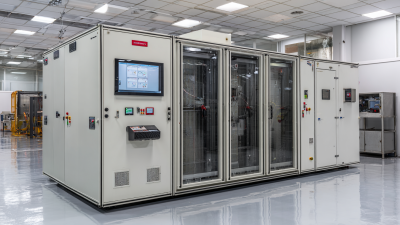
Constant temperature Humidity Chambers play a crucial role in various industries. They are essential for testing materials, products, and components under controlled environmental conditions. These chambers maintain specific temperature and humidity levels, which helps in simulating real-world scenarios. This ensures reliability and durability in products, particularly for electronics, pharmaceuticals, and packaging.
Choosing the right chamber requires understanding your specific needs. What is the temperature range required? What are the moisture levels necessary for your tests? Consider the size and capacity of the chamber. Smaller units might be suitable for basic tests, while larger chambers can accommodate bulk materials. Features like precision control and monitoring capabilities are also vital. Yet, people often overlook these factors, resulting in inadequate testing.
Proper training and knowledge in operating these chambers are essential. Users must understand calibration and maintenance routines. Without proper checks, results can be misleading. It's vital to monitor your equipment regularly to ensure its reliability. This step, though often neglected, is crucial for generating valid data and authentic results. Errors in conditions can lead to flawed conclusions and wasted resources.
How to Choose the Right Constant Temperature Humidity Chamber?
| Model | Temperature Range (°C) | Humidity Range (%) | Volume (L) | Power Supply (V) | Price ($) |
| Model A | -10 to 60 | 20 to 95 | 100 | 220 | 1500 |
| Model B | -20 to 70 | 10 to 98 | 200 | 220 | 2500 |
| Model C | 0 to 50 | 30 to 85 | 150 | 110 | 1800 |
| Model D | -10 to 65 | 20 to 95 | 300 | 220 | 3000 |
| Model E | -30 to 70 | 10 to 95 | 400 | 220 | 4000 |
Key Specifications to Consider When Selecting a CT Chamber
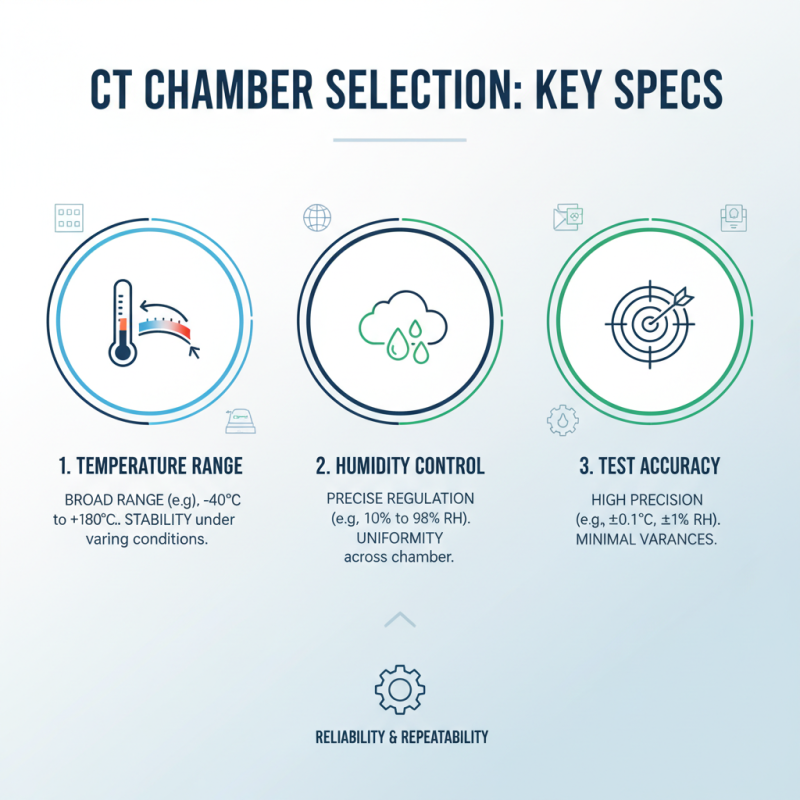
When selecting a constant temperature humidity chamber, several key specifications come into play. Temperature range is critical. Chambers that offer broader ranges are ideal for diverse experiments. Look for models that can maintain stability under varying conditions. Test accuracy is equally essential. Precision measurements are vital, and slight variances can affect outcomes significantly.
Humidity control should also be examined carefully. Some chambers provide fine humidity adjustments. A variation of just a few percentage points can impact results in sensitive applications. Consider the chamber's construction. Materials often affect performance and longevity. Researching these factors can save time and resources in the long run.
Energy efficiency is an overlooked aspect. Although initial costs are essential, operational costs matter too. An energy-efficient chamber can lower expenses. Lastly, examine user reviews and research the manufacturer. This step helps gauge reliability and customer support. Balancing these specifications can lead to better decisions, but there will always be trade-offs.
Evaluating Temperature Control Ranges: Precision and Stability Requirements
Choosing the right constant temperature humidity chamber requires careful evaluation of temperature control ranges. Precision and stability are crucial for various applications, ranging from material testing to pharmaceutical development. Recent industry reports reveal that temperature variations within ±0.5°C are ideal for many laboratory settings. This level of control ensures that results are reliable and reproducible.
Stability is just as important as precision. A study indicates that fluctuations within ±2% RH guarantee minimal impact on sensitive experiments. Some chambers struggle to maintain this level of stability, leading to compromised results. Manufacturers often cite performance metrics, but independent evaluations provide a clearer picture. When assessing a chamber's performance, look closely at independent test results.
Also, consider how the chamber's design influences temperature uniformity. For instance, chambers with forced convection fans often maintain more even temperatures. However, these systems can introduce noise, which may affect sensitive electronic components. Always weigh the pros and cons of design features when making a decision, as choices may lead to trade-offs in your specific application.
Assessing Humidity Control Capabilities: Absolute vs. Relative Humidity
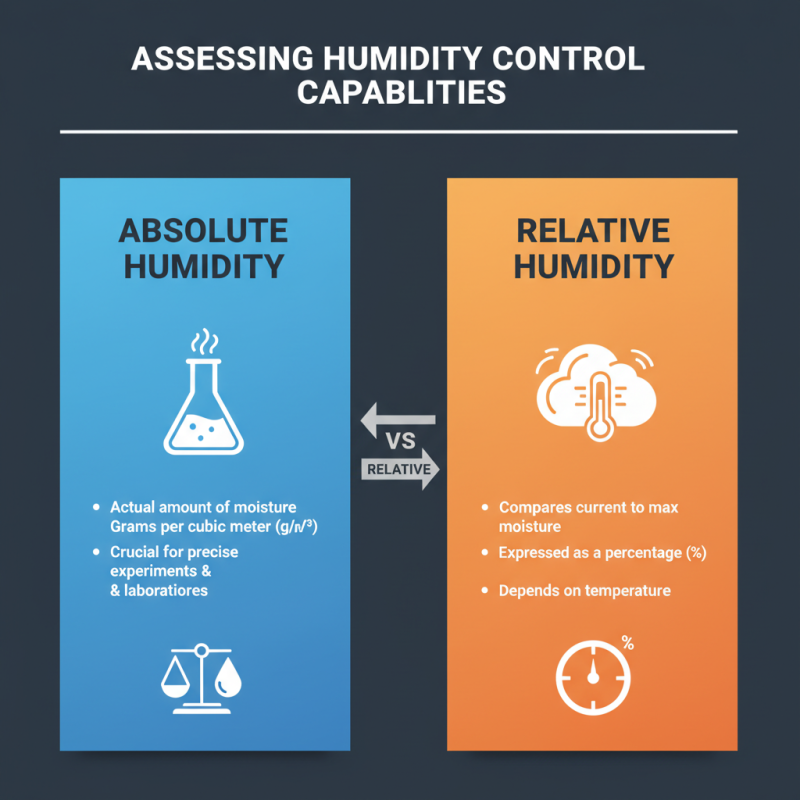
When evaluating humidity control capabilities, it’s vital to understand the difference between absolute and relative humidity. Absolute humidity measures the actual amount of moisture in the air, expressed in grams per cubic meter. It’s crucial for precise experimentation, especially in laboratories where specific conditions are required. In contrast, relative humidity compares the current moisture level to the maximum amount the air can hold at a given temperature, presented as a percentage.
Tips: Always check how your chamber measures these humidity types. You may find some models prioritize one over the other, impacting your results.
Selecting a constant temperature humidity chamber requires careful consideration of both humidity types. Absolute humidity provides real data for material testing, while relative humidity can affect the behavior of substances within the chamber. For example, certain biological samples react differently at varying levels of moisture saturation.
Tips: Consider what you will be testing. Some materials may require strict absolute control, while others can tolerate variations in relative humidity. Test your chamber with and without samples to gauge performance.
Analyzing Chamber Size and Configuration for Specific Applications
Choosing the right constant temperature humidity chamber requires understanding its size and configuration for your specific applications. The chamber's dimensions should align with the materials or products being tested. For example, a larger chamber may be necessary for bulk materials, while smaller versions suit delicate samples.
When considering a chamber's configuration, think about airflow patterns and ease of access. These factors can influence test uniformity and reproducibility. According to a recent industry report, chambers with optimized airflow can improve temperature consistency by up to 15%. This is crucial for ensuring reliable test outcomes.
**Tip:** Assess your samples' dimensions before selecting a chamber. Aim for a design that promotes even distribution of temperature and humidity.
Furthermore, the operating range of the chamber is a vital aspect. A chamber that can accommodate extreme conditions ensures flexibility in testing. Data shows that over 30% of users reported needing adjustments to their setups due to inadequate temperature ranges.
**Tip:** Always account for future needs. Expanding your testing capabilities might require a more versatile chamber design.
Reviewing Industry Standards and Certifications for Reliability
When selecting a constant temperature humidity chamber, industry standards and certifications are crucial. These assess the reliability and performance of these chambers. The International Organization for Standardization (ISO) and ASTM International provide guidelines that ensure chambers meet specific criteria. Their standards focus on accuracy, durability, and environmental conditions.
Certification from recognized bodies enhances confidence in the product. For instance, the ISO 9001 certification indicates a commitment to quality management systems. Research reveals that equipment adhering to these standards has lower failure rates. A study from the National Institute of Standards and Technology (NIST) highlights that certified chambers maintain temperature variations within 0.5°C, significantly improving experimental outcomes.
Tips: Prioritize chambers with multiple certifications for enhanced reliability. Regular calibration also ensures ongoing accuracy. Be cautious, as not all manufacturers may comply with stringent testing, possibly affecting performance. Always ask for up-to-date certification documentation before purchase.
Temperature and Humidity Chamber Performance Metrics
Budgeting for Purchase and Maintenance Costs of CT Chambers
When budgeting for a constant temperature humidity chamber (CT chamber), consider both the purchase and maintenance costs. The initial investment may seem daunting, but understanding long-term expenses can provide clarity. Maintenance costs can vary widely based on the chamber's complexity. Regular checks ensure optimal performance and longevity.
Tips: Investigate if the chamber requires special calibration. This can add to ongoing costs. Look for resources or manufacturers providing training. This could save money on potential errors.
Evaluate the energy consumption of the CT chamber. Over time, high energy costs can exceed initial savings from a cheaper model. Reliable units may have a higher upfront cost but could be more economical in the long run.
Tips: Seek feedback from industry professionals. Their experiences can reveal hidden maintenance costs. A friendlier interface may reduce training time, which is another expense to factor in. Always question the longevity and reliability of the equipment. The cheapest option may lead to higher costs down the line. Reflect on your choices carefully before deciding.
Conclusion
When selecting a Constant Temperature Humidity Chamber, it's crucial to understand its significance in various testing and research environments. These chambers provide precise control over both temperature and humidity, making them essential for simulating real-world conditions. Key specifications to consider include the temperature control range, which determines the precision and stability required for specific applications, and the humidity control capabilities, where understanding the difference between absolute and relative humidity is vital.
Additionally, evaluating the chamber size and configuration is important to meet the specific needs of your experiments. Compliance with industry standards and certifications ensures the reliability and accuracy of the chamber's performance. Finally, budgeting for both the purchase and ongoing maintenance costs will help ensure a sustainable investment in your research capabilities. Overall, careful consideration of these factors will guide you in choosing the right Constant Temperature Humidity Chamber for your needs.