







ASTM B117 vs ISO 9227: Salt Spray Testing Standards, Methods, and Chamber Requirements
Introduction
Salt Spray Testing is one of the most widely used accelerated corrosion testing methods for evaluating metallic materials, protective coatings, and surface treatments. In manufacturing industries, including automotive, electronics, hardware, metal finishing, and industrial coating production, salt spray testing provides a controlled environment for assessing corrosion resistance under specified laboratory conditions.
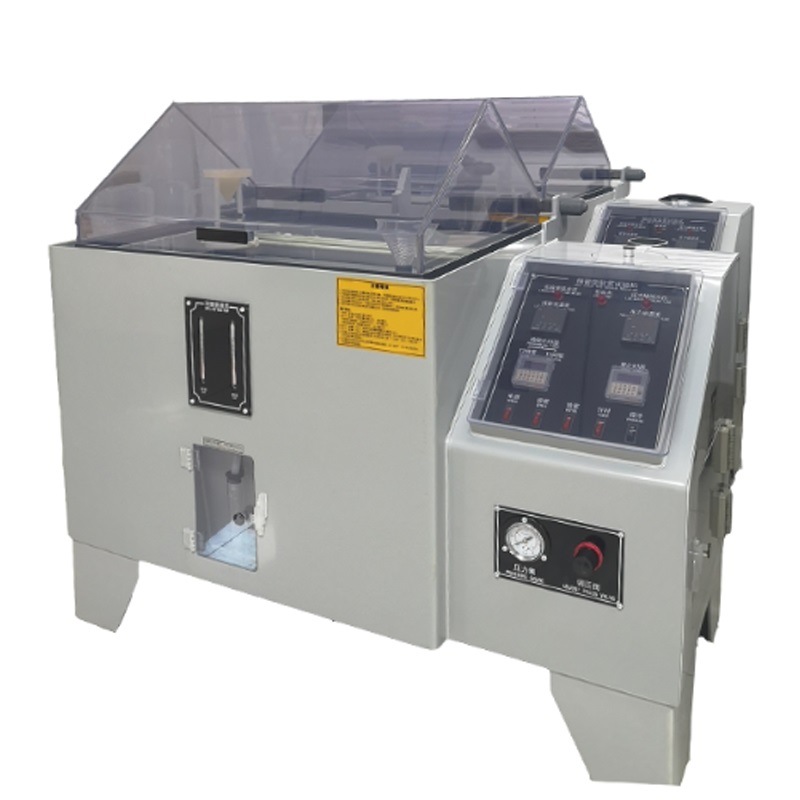
Two important standards associated with salt spray testing are ASTM B117 and ISO 9227. Although both standards address Salt Spray Corrosion Testing, their scopes, procedures, and application requirements should be understood before selecting asalt spray test chamber or establishing a laboratory testing program.
What Is ASTM B117?
ASTM B117, officially titled *Standard Practice for Operating Salt Spray (Fog) Apparatus*, establishes the apparatus, procedures, and operating conditions required to create and maintain a salt spray testing environment.
The standard is widely used for corrosion resistance evaluation of metals and coated metal specimens. It provides a controlled corrosive atmosphere that can help manufacturers obtain comparative information about the corrosion resistance of specimens tested under defined conditions.
ASTM B117 does not prescribe the specific specimen type, exposure duration, or acceptance criteria for every product. These requirements are generally established by product specifications, customer requirements, or other applicable standards.
An important limitation is that ASTM B117 results should not automatically be interpreted as predictions of long-term corrosion performance in natural environments.
What Is ISO 9227?
ISO 9227, titled *Corrosion tests in artificial atmospheres — Salt spray tests*, specifies apparatus, reagents, and procedures for conducting three principal salt spray test methods:
- Neutral Salt Spray (NSS)
- Acetic Acid Salt Spray (AASS)
- Copper-Accelerated Acetic Acid Salt Spray (CASS)
The standard also describes methods for evaluating the corrosivity of the Salt Spray Test Cabinet environment.
ISO 9227 is applicable to metallic materials with or without permanent or temporary corrosion protection. It is particularly useful for identifying discontinuities, pores, and other defects in certain metallic and non-metallic protective coatings.
ISO 9227 does not independently define universal acceptance criteria or exposure durations for every product. Such requirements must be obtained from relevant product specifications.
ASTM B117 vs ISO 9227: Key Differences
ASTM B117 primarily establishes the operating practice for salt spray apparatus, while ISO 9227 provides a broader framework covering NSS, AASS, and CASS salt spray methods.

The two standards should not be regarded as automatically interchangeable in every testing program. Laboratory procedures, specimen preparation, evaluation criteria, and customer requirements must be considered.
NSS, AASS, and CASS Testing
Neutral Salt Spray (NSS)
NSS is the conventional neutral salt spray test method.
It is commonly used to evaluate:
- Metallic coatings
- Electroplated components
- Conversion coatings
- Anodized surfaces
- Organic coatings on metallic substrates
NSS testing is widely applied in quality control and product qualification.
Acetic Acid Salt Spray (AASS)
AASS introduces acetic acid into the salt spray testing environment.
It is particularly applicable to certain decorative coating systems, including copper-nickel-chromium and nickel-chromium coatings, as well as selected aluminum coating applications.
Copper-Accelerated Acetic Acid Salt Spray (CASS)
CASS uses copper-containing salt solution chemistry within an acidic salt spray environment.
It is commonly used for evaluating certain decorative electroplated coating systems and selected anodized or organic coatings on aluminum.
The three methods have different testing purposes and environmental conditions. A test method should be selected according to the relevant product specification rather than simply choosing the most aggressive environment.
Salt Spray Test Chamber Requirements
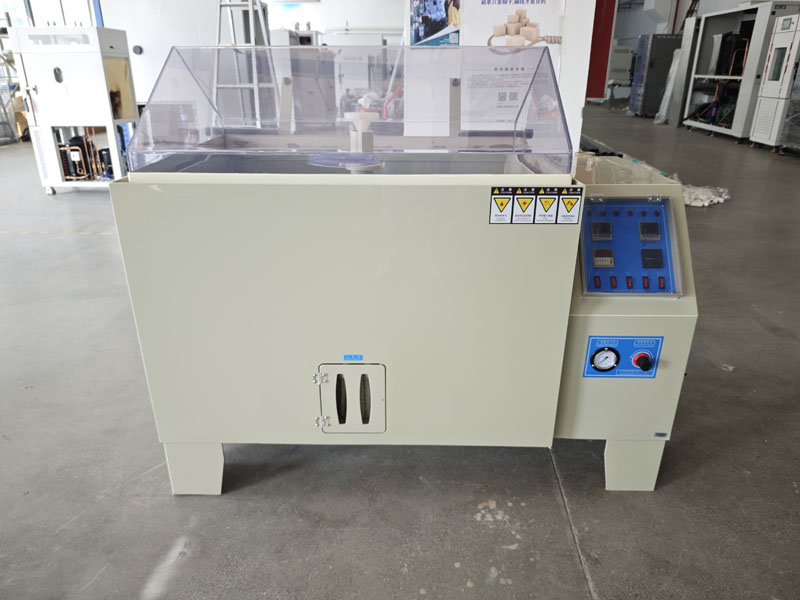
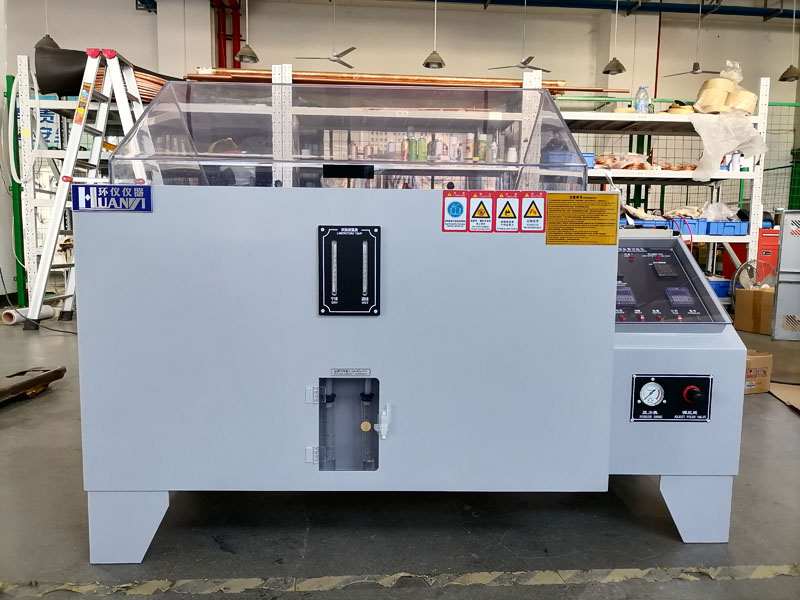
A Salt Spray Test Chamber designed for standards-based testing should provide stable and controllable operating conditions.
Important equipment considerations include:
- Temperature Control
The chamber must maintain the temperature specified by the applicable test method.
Stable temperature control contributes to consistent testing conditions and reduces unnecessary environmental variation.
- Salt Solution Preparation
The salt solution should be prepared according to the applicable standard, including requirements concerning concentration, water quality, and pH.
- Spray Generation System
The spray system should generate a suitable salt fog and maintain the required deposition conditions.
Atomization performance, compressed air quality, and spray distribution can influence chamber operation.
- Salt Fog Deposition
The collected solution quantity and its characteristics are important indicators of the test environment.
The deposition rate should be verified according to the applicable standard and testing procedure.
- Specimen Placement
Specimen orientation, spacing, and loading conditions should follow the relevant test method.
Improper placement may affect exposure conditions and compromise the interpretation of results.
Why Salt Spray Test Results Cannot Directly Predict Service Life?
Salt spray testing is an accelerated laboratory method, not a direct simulation of every outdoor corrosion mechanism.
Research comparing ISO 9227 results with outdoor exposure has demonstrated that the correlation between laboratory and field performance varies depending on the coating system, exposure environment, and evaluation criteria.
Consequently, a specimen passing a specified salt spray exposure does not necessarily guarantee a particular number of years of corrosion resistance in actual service.
For applications requiring more realistic environmental simulation, cyclic corrosion testing or complementary outdoor exposure may be necessary.
Conclusion
ASTM B117 and ISO 9227 are fundamental references for salt spray corrosion testing. Understanding their scopes and limitations helps manufacturers establish appropriate test procedures and select suitable Salt Spray Test Chambers.
For laboratories and manufacturers, reliable corrosion evaluation depends not only on the testing standard but also on equipment stability, solution preparation, environmental control, specimen handling, and appropriate result interpretation.