


General Requirements for Thermal Vacuum Testing of Spacecraft
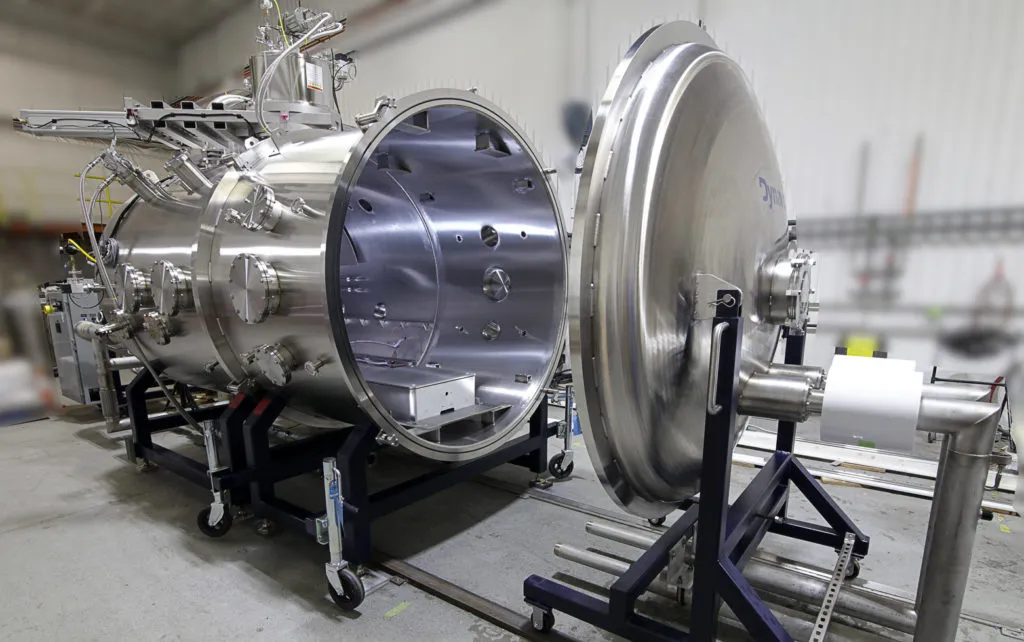
During the development of spacecraft, Thermal Vacuum Testing equipment is used to simulate environments such as high vacuum, cold-black conditions, solar radiation, and high temperatures. The standard *GJB 3758A-2019: Thermal Simulation Methods for Spacecraft Space-Thermal Testing* outlines specific requirements for this equipment; let us examine them below.
General requirements for spacecraft thermal vacuum testing equipment:
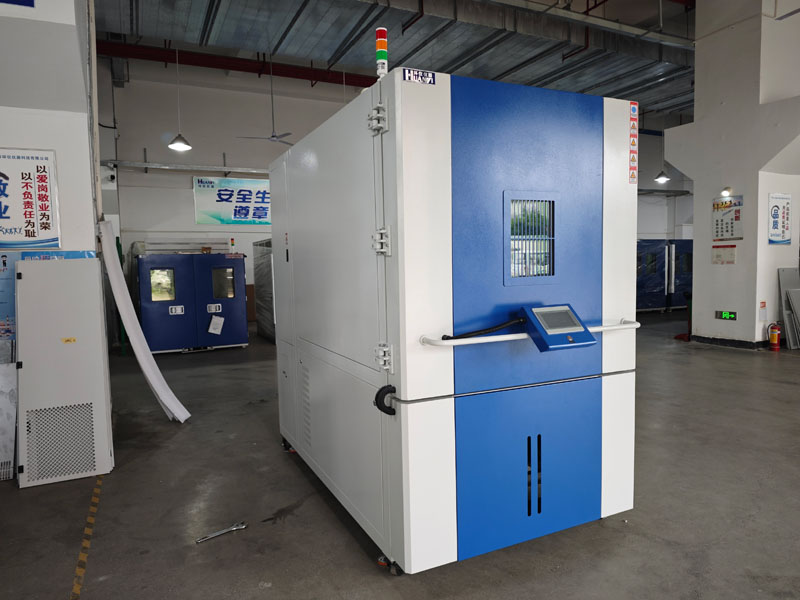
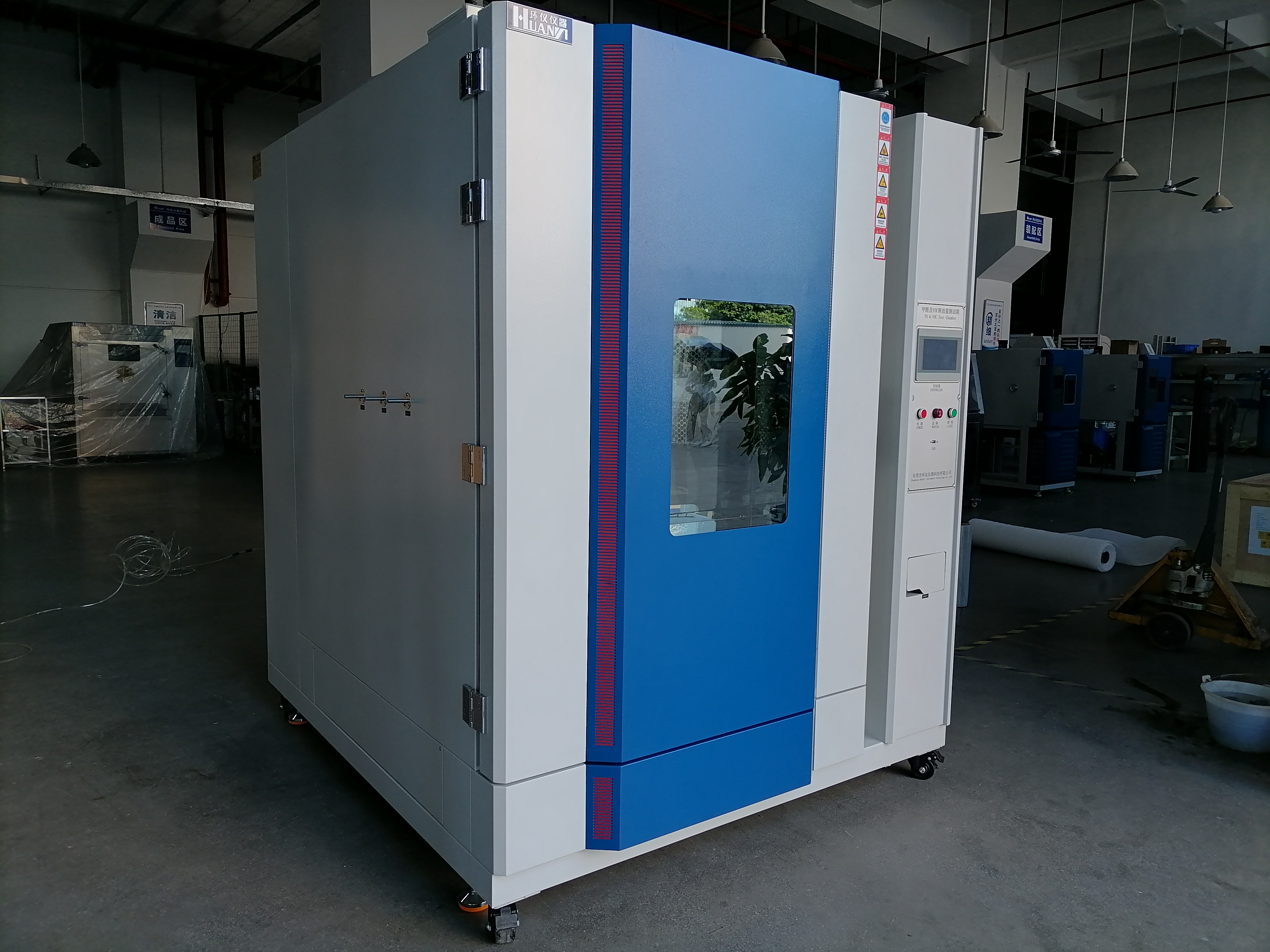
Testing Equipment: Huanyi Instruments Thermal Vacuum Testing Equipment
Test Standard: GJB 3758A-2019 Thermal Simulation Methods for Spacecraft Space-Thermal Testing
Key Requirements:
I. Pressure:
The pressure within the thermal-vacuum test equipment shall be monitorable during the test. For non-pressurized spacecraft or modules, the pressure shall not exceed 1.3 × 10² Pa; for pressurized spacecraft or modules, the pressure shall not exceed 6.0 × 10² Pa.
II. Dimensions:
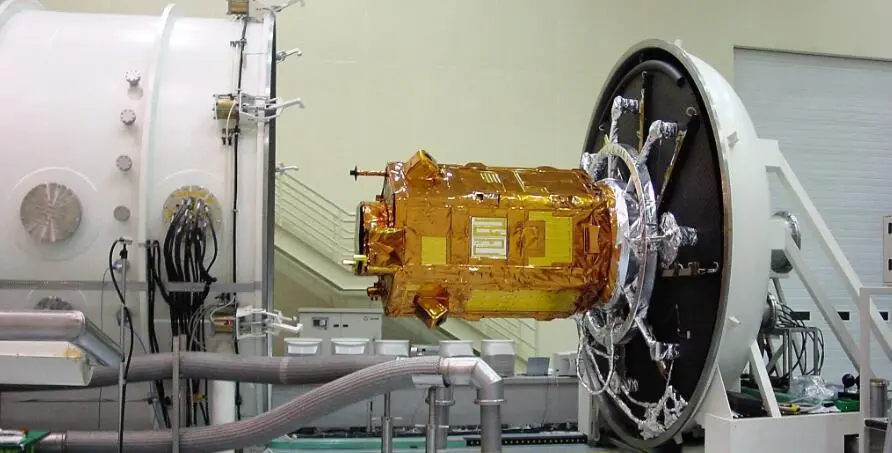
The dimensions of the space environment Simulation Chamber shall accommodate the installation and operational requirements of the test article and its associated tooling, and shall meet the following criteria:
a) When simulating external heat flux using the incident heat flux method during a thermal balance test, the ratio of the characteristic dimension of the space environment simulation chamber to that of the spacecraft shall generally be no less than 3;
b) When simulating external heat flux using the absorbed heat flux method or the equivalent radiative heat sink temperature method during a thermal balance test, the ratio of the characteristic dimension of the space environment simulation chamber to that of the spacecraft shall generally be no less than 2.
III. Heat Sink:
The requirements for the heat sink are as follows:
a) During external heat flux simulation for thermal balance tests, the surface temperature of the heat sink shall not exceed 100 K; for the heat sink surface facing the spacecraft, the solar absorptance shall be no less than 0.95, and the hemispherical emissivity shall be no less than 0.90;
b) When a solar simulator is used to simulate external heat flux during thermal balance tests, the temperature of the movable heat sink surface simulating the Earth's shadow shall not exceed 100 K;
c) During temperature simulation for thermal-vacuum tests, the heat sink shall meet the spacecraft's high- and low-temperature test requirements.
IV. Background Heat Flux:
During external heat flux simulation for thermal balance tests, the background heat flux of the thermal-vacuum test equipment shall not exceed 10 W/m².
V. Test Support Structure:
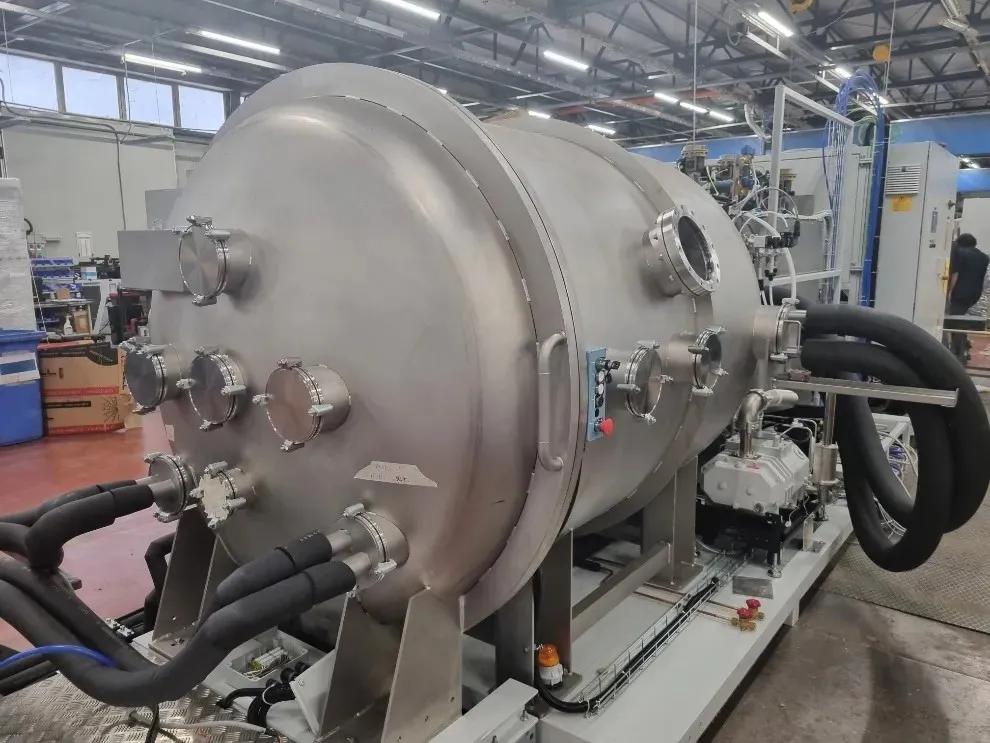
The requirements for the spacecraft test support structure are as follows:
a) It shall generally possess the capability to adjust and maintain the spacecraft in a horizontal position;
b) It shall be capable of withstanding vacuum and low-temperature test environments;
c) Its strength and rigidity shall meet the support requirements for the spacecraft and the thermal simulation device, while incorporating an adequate safety margin;
d) Its mechanical interfaces shall meet the requirements for mating with the spacecraft;
e) Measures such as thermal isolation or active temperature control shall be implemented at the connection points between the test support structure and the spacecraft to minimize conductive heat transfer through the support structure, as well as to reduce obstruction and radiant heat exposure affecting the spacecraft.