




Rubber Shoe Sole Yellowing and Aging Resistance Testing Solutions
I. Testing Background
Rubber shoe soles are exposed to sunlight, high temperatures, and oxygen during daily wear and storage/transportation, which can easily lead to problems such as yellowing, hardening, cracking, and even a decline in mechanical properties. These issues not only affect the product's appearance but also directly impact the sole's lifespan and wear safety. How to scientifically and quickly evaluate the yellowing resistance and anti-aging properties of rubber shoe soles has become a core issue in the quality control of footwear material manufacturers.

II. Testing Basis and Standards
This test plan strictly adheres to HG/T 3689-2014 "Test Method for Yellowing Resistance of Footwear". This standard specifies two test methods: Method A (sunlight method) and Method B (ultraviolet lamp method). Method A uses a 300W sunlight bulb to simulate the ultraviolet light and heat radiation environment of natural sunlight and is suitable for arbitration and precision scientific research and development. The evaluation of yellowing resistance test results is based on visual rating according to GB/T 250 "Grey Table for Evaluating Color Change".
III. Specific Experimental Parameters
| Parameter Items | Technical Specifications |
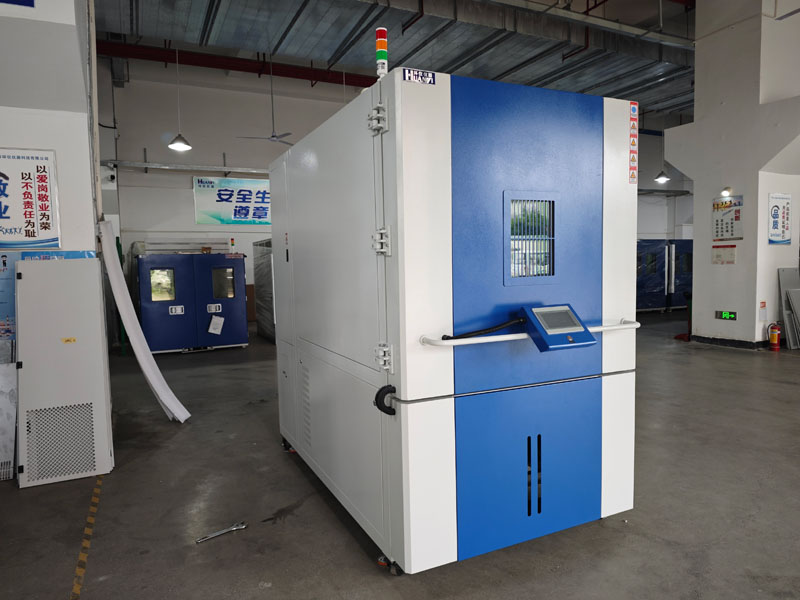
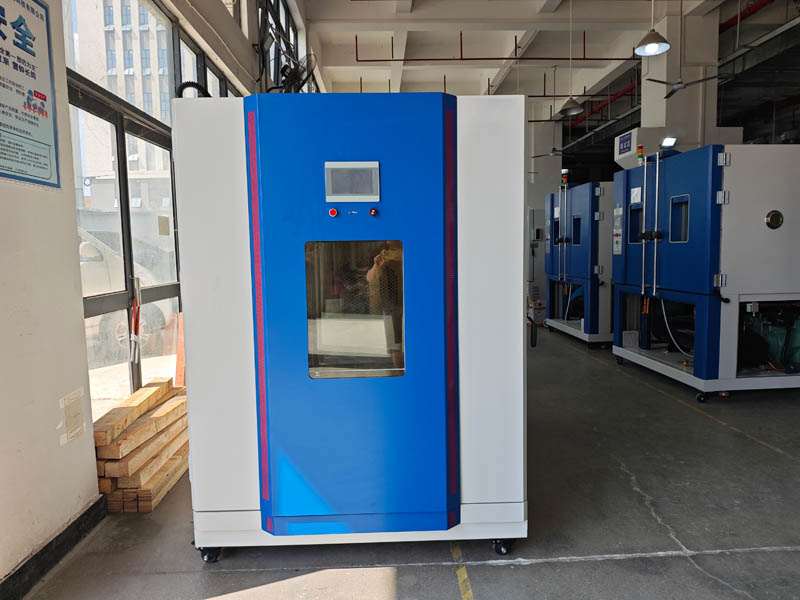
| Testing Equipment | Aging Tester |
| Inner Chamber Dimensions | 500mm×500mm×600mm |
| Temperature Control Range | Ambient temperature ~ 200℃ |
| Control Accuracy | ±3℃ |
| Distribution Accuracy | ±2℃ (at 100℃) |
| UV Light Source | 300W Osram Aging Bulb |
| Turn Rotation Speed | 3±1 rpm |
| Sample Size | ≥30mm×10mm |
| Bullet-Sample Distance | 250±2mm |
Yellowing resistance test conditions: temperature 50℃, test time 24 hours for fabric and 12 hours for backing.
Thermo-oxidative aging test conditions: temperature 70℃, test time 24 hours, theoretically equivalent to aging effects after 6 months of exposure to the atmosphere.
IV. Experimental Procedure
Step 1: Sample Preparation. Cut a sample no smaller than 70mm × 40mm from the rubber shoe sole. The sample should be flat, free of defects, and uncontaminated.
Step 2: Equipment Setup. Set the temperature of the chemical testing instrument to 50℃ (yellowing resistance test) or 70℃ (aging test), and adjust the distance between the turntable and the light source to 250mm.
Step 3: Sample Placement. Place the sample horizontally on the stainless steel rotating tray with the front side facing up. Maintain a distance of at least 50mm between the sample and the center of the turntable, leaving gaps between samples and ensuring they do not overlap.
Step 4: Starting the Test. Turn on the turntable switch to ensure the sample receives uniform light. Turn on the 300W aging bulb and simultaneously start the timer to record the test time.
Step 5: Result Evaluation. After the test, remove the sample and allow it to cool to room temperature. Under a standard light source (D65), visually evaluate the sample against the untested original sample using the GB/T 250 gray scale, accurate to 0.5 grade. Select the worst grade as the final result. The aging test uses a Universal Testing Machine to test the tensile strength and elongation at break before and after aging, and calculates the rate of change in performance.
V. Experimental Results Data
Taking a certain brand of white rubber shoe sole as an example, after testing at 50℃ for 24 hours:
| Test Items | Before Test | After Test | Change Value |
| Gray Sample Card Rating | - | Level 4 | Slight Discoloration |
| Whiteness Value (L*) | 92.3 | 85.6 | -6.7 |
| Yellowing Index (YI) | 4.2 | 12.8 | +8.6 |
After 24 hours of thermo-oxidative aging at 70℃, the rubber sole retained 82.3% of its tensile strength and 76.5% of its elongation at break. These data indicate that, under simulated 6 months of natural aging, the rubber sole exhibits only slight yellowing (level 4) and maintains good mechanical properties, meeting the quality requirements for footwear products.