









Salt Spray Test Chamber Standard Operating Procedure
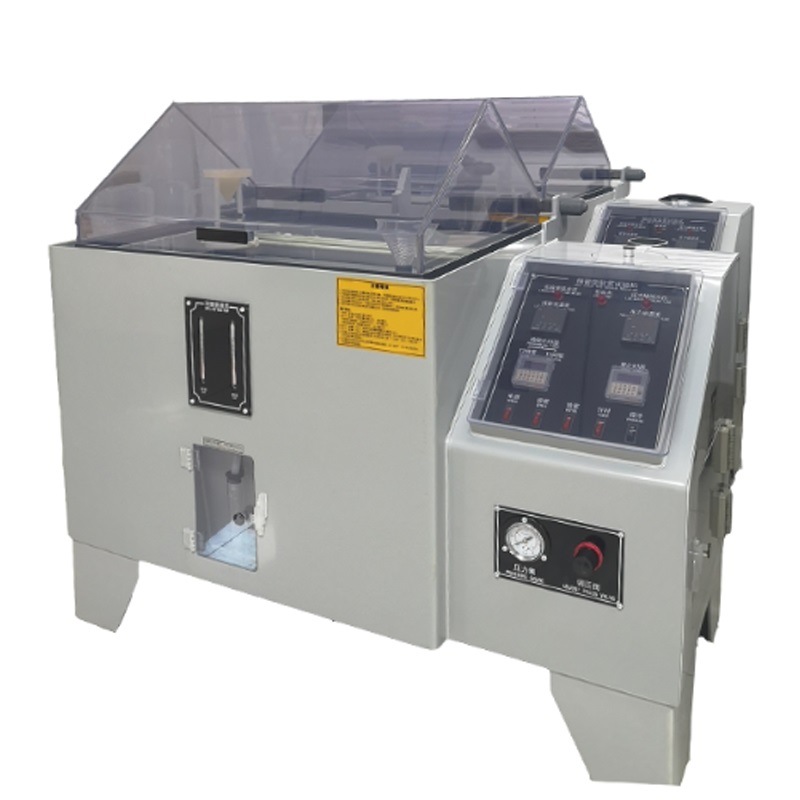
Salt Spray Test chambers are core environmental simulation equipment for evaluating the corrosion resistance of metallic materials, electroplated coatings, and coated parts. Standardized operating procedures are not only the cornerstone for obtaining comparable and reproducible test data, but also a prerequisite for ensuring equipment lifespan and laboratory safety. This article systematically breaks down the standardized operating procedures (SOPs) for the entire salt spray test chamber chain, from preliminary preparation, parameter setting, process monitoring to post-maintenance, based on core standards such as GB/T10125 and ISO9227, providing rigorous technical references for quality control and R&D testing.
I. Pre-test Preparation: Standardized Pretreatment of Environment, Solution, and Samples
1. Confirmation of Salt Spray Chamber Status and Test Environment
Before operation, the basic status of the equipment must be confirmed. Check whether the chamber sealing strip is intact to ensure there is no damage or air leakage; confirm that the water level in the saturation tank (pressure tank) is normal, the compressed air inlet pressure is stable within the standard range, and that it has undergone oil-water separation treatment. The laboratory ambient temperature should be controlled between 15℃ and 30℃ to avoid abnormal ambient temperatures affecting the stability of the temperature field inside the chamber.
2. Accurate Preparation of Test Solutions
The purity of the solution is a key variable affecting the test results. Analytical grade or higher sodium chloride and deionized water or distilled water with a resistivity of not less than 5000 Ω·cm must be used for preparation. Tap water or industrial salt is strictly prohibited. The solution concentration for the neutral salt spray test (NSS) is (5±0.5)%, and after preparation, the pH value needs to be adjusted to 6.5~7.2 using dilute hydrochloric acid or NaOH solution. For acetic acid salt spray (AASS) or copper accelerated salt spray (CASS), glacial acetic acid or copper chloride must be added according to standards, and the acidic pH range must be strictly controlled. Prepared solutions should be allowed to stand and filtered, and it is recommended to prepare and use them immediately; the storage time should not exceed 24 hours.
3. Sample Pretreatment and Placement Specifications
The sample surface must be cleaned to remove oil, fingerprints, and dust, ensuring the test surface is clean and dry. When placing the sample, it should be at an angle of 15° to 30° to the vertical direction. This angle ensures free settling of the salt spray and avoids droplet accumulation. Sufficient spacing must be maintained between samples to avoid mutual contact or obstruction, and samples must not contact the inner wall of the chamber or drip condensate. For samples with cut edges, an inert coating must be used to protect the edges to prevent edge effects from interfering with the test results.
II. Operation Procedures: Parameter Setting and Process Monitoring
1. Equipment Initialization and Parameter Setting
Connect the power supply and turn on the heating switches for the chamber and saturation tank to preheat. Set the working chamber temperature according to the test type: 35℃±2℃ for neutral salt spray (NSS), and 50℃±2℃ for copper accelerated salt spray (CASS). The saturation tank temperature must be set higher than the working chamber temperature to ensure that compressed air does not condense due to cooling after entering the chamber, thus ensuring stable spray volume. Set the cumulative test time and spray mode (continuous or intermittent) on the control panel.
2. Spray Start-up and Sedimentation Rate Calibration
After the chamber temperature and saturation tank temperature have reached the set values and stabilized, the spray switch can be started. It is recommended to perform sedimentation rate calibration at the initial spray stage: place at least two clean salt spray collectors in the effective area inside the chamber and collect continuously for at least 16 hours. Calculate the average sedimentation rate; its standard value should be 1.0~2.0 mL/(h·80cm2). If the sedimentation rate does not meet the standard, the spray pressure needs to be adjusted or the nozzles checked for blockages until the environmental parameters meet the standard requirements before officially starting the sample testing and timing.
3. Process Monitoring During Operation
During the test operation, the number of times the chamber is opened should be minimized. The total daily opening time for inspection should not exceed 1 hour to avoid drastic fluctuations in temperature and humidity inside the chamber, which could affect the corrosion rate. The temperature, pressure, and macroscopic condition of the sample surface inside the chamber must be recorded daily, but wiping or touching the sample surface is not allowed. At the same time, the brine tank level must be checked regularly, and the pre-prepared solution must be replenished in a timely manner to prevent the test from being interrupted due to a lack of solution.
III. Test Termination and Post-processing: Sample Evaluation and Equipment Maintenance
1. Test Termination and Sample Removal
After the preset test cycle is reached, first turn off the spray switch, then turn off the heating system. It is recommended to allow the chamber temperature to drop naturally to near room temperature before opening the chamber door to reduce the risk of salt spray escaping and corroding laboratory equipment. Operators must wear protective gloves and goggles when removing the samples.
2. Sample Post-processing and Result Evaluation
After removal, the samples should be gently rinsed with running water to remove any residual salt crystals on the surface, and then allowed to air dry at room temperature for 0.5–1 hour. The dried samples should be rated according to standards such as GB/T6461 or ISO10289. Evaluation indicators include the matrix corrosion grade (Rp), appearance change grade (Ra), blistering grade, etc., and the corrosion morphology and distribution should be recorded.
3. Cleaning and Maintenance of the Salt Spray Test Chamber
After the test, the remaining solution in the brine tank must be drained, and the brine tank, spray tower, and collector should be cleaned with deionized water to prevent residual salt crystals from corroding the pipes and nozzles. Wipe the inner walls and sealing strips of the chamber with a soft cloth and keep them dry. When not in use for an extended period, drain all water from the tank and keep the door slightly ajar for ventilation. Regularly (e.g., monthly) check the nozzles for wear, clean or replace clogged nozzles, and ensure uniform spray for the next test.
IV. Key Safety and Compliance Precautions
Personal protective measures must be taken throughout the operation to avoid inhalation of salt spray or skin contact with the solution. The compressed air source must be equipped with an oil-water separator to ensure a supply of dry, clean air. All waste liquids should be collected as corrosive waste liquids, neutralized, and then disposed of by a qualified organization; direct discharge into ordinary sewers is strictly prohibited. Only by strictly following the closed-loop process of "preparation-calibration-operation-maintenance" can the scientific validity and reliability of every salt spray test data be ensured.