





Salt Spray Test Chamber Working Principle: How Salt Fog Corrosion Testing Works
Introduction
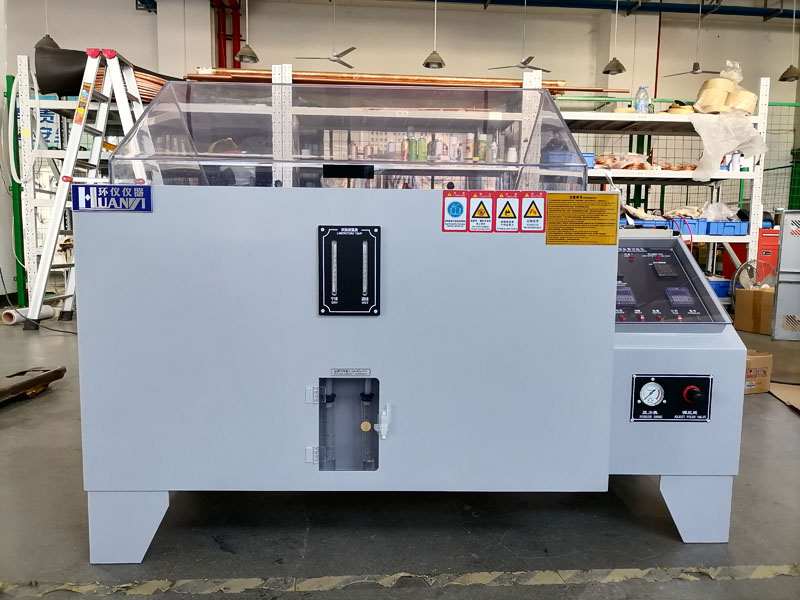
Salt Spray Test Chamber is laboratory equipment designed to generate and maintain a controlled corrosive atmosphere for evaluating the corrosion resistance of metallic materials and protective coatings.
The equipment is widely used in automotive manufacturing, electronics, metal finishing, hardware production, and coating quality control.
Understanding the working principle of a salt spray chamber helps laboratories evaluate equipment performance, maintain consistent testing conditions, and identify important technical requirements when purchasing corrosion testing equipment.
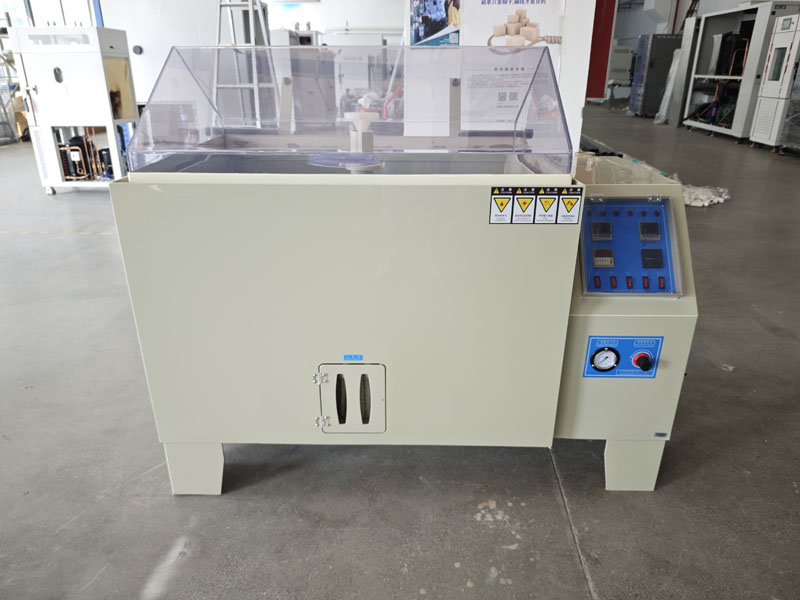
What Is a Salt Spray Test Chamber?
Salt spray test chamber creates a controlled environment in which prepared test specimens are exposed to a salt-containing fog.
The corrosive environment is generated by atomizing a prepared salt solution using compressed air. The resulting fog is distributed within the chamber, exposing the specimens to specified test conditions.
The test environment is maintained according to the requirements of standards such as ASTM B117 and ISO 9227.
How Does a Salt Spray Chamber Work?
The operating process generally involves several interconnected systems.
1. Salt Solution Preparation
The salt solution is prepared using the specified salt concentration, water quality, and pH requirements.
Solution preparation is an important part of the testing process because variations in solution chemistry can affect corrosion behavior.
2. Compressed Air Supply
Compressed air is supplied to the atomization system.
The air supply must be appropriately controlled and conditioned according to the equipment design and applicable testing requirements.
3. Salt Fog Generation
The salt solution is delivered to a spray nozzle or atomization assembly.
Compressed air assists in generating fine droplets, which form the salt fog used during the test.
The atomization system must be designed to support suitable spray generation and stable operation.
4. Salt Fog Distribution
The generated fog is distributed within the chamber.
The chamber structure, spray tower arrangement, airflow, and specimen loading conditions can influence the distribution of the corrosive environment.
Proper chamber design helps reduce unnecessary variation in specimen exposure.
5. Temperature Control
The chamber temperature is maintained using a heating and control system.
The temperature sensor, controller, heating arrangement, and chamber insulation work together to maintain the required environmental conditions.
6. Specimen Exposure
Test specimens are placed inside the chamber according to the applicable standard.
Specimen orientation, spacing, and loading arrangement are important because they influence the exposure conditions.
7. Environment Verification
During testing, the laboratory verifies the operating conditions according to the relevant test method.
Common verification parameters include temperature, collected solution quantity, solution concentration, and pH.
Key Components of a Salt Spray Test Chamber
Chamber Body
The chamber body provides the enclosure for the corrosive testing environment.
Materials used in the chamber construction should be selected for compatibility with salt solution and corrosive conditions.
Spray System
The spray system generates and distributes salt fog.
The atomization arrangement, spray tower, nozzle, and compressed air supply are important elements of this system.
Heating System
The heating system maintains the chamber temperature required by the test method.
Control System
The control system monitors and regulates the operating parameters.
Depending on equipment configuration, it may provide temperature control, operating status monitoring, test timing, and alarm functions.
Salt Solution Supply System
The solution supply system provides prepared salt solution to the atomization assembly.
Its design should support stable solution delivery and convenient laboratory operation.
Important Factors Affecting Salt Spray Test Results
Although the chamber generates the testing environment, several additional factors influence the results:
- Salt solution preparation
- Temperature stability
- Salt fog deposition
- Specimen positioning
- Chamber loading
- Test duration
- Sample preparation
- Evaluation criteria
- Laboratory operating procedures
Equipment performance and laboratory procedures should therefore be considered together.
Salt Spray Testing According to ASTM B117 and ISO 9227
ASTM B117 establishes operating practices for salt spray apparatus, while ISO 9227 specifies NSS, AASS, and CASS test methods.
The required test conditions depend on the selected method.
A laboratory should confirm the appropriate test method before configuring equipment or preparing specimens.
Conclusion
The working principle of a salt spray test chamber involves salt solution preparation, compressed air atomization, fog distribution, temperature control, specimen exposure, and verification of test conditions.
A well-designed chamber supports controlled corrosion testing, while reliable results also depend on correct specimen preparation, operating procedures, and standard compliance.