


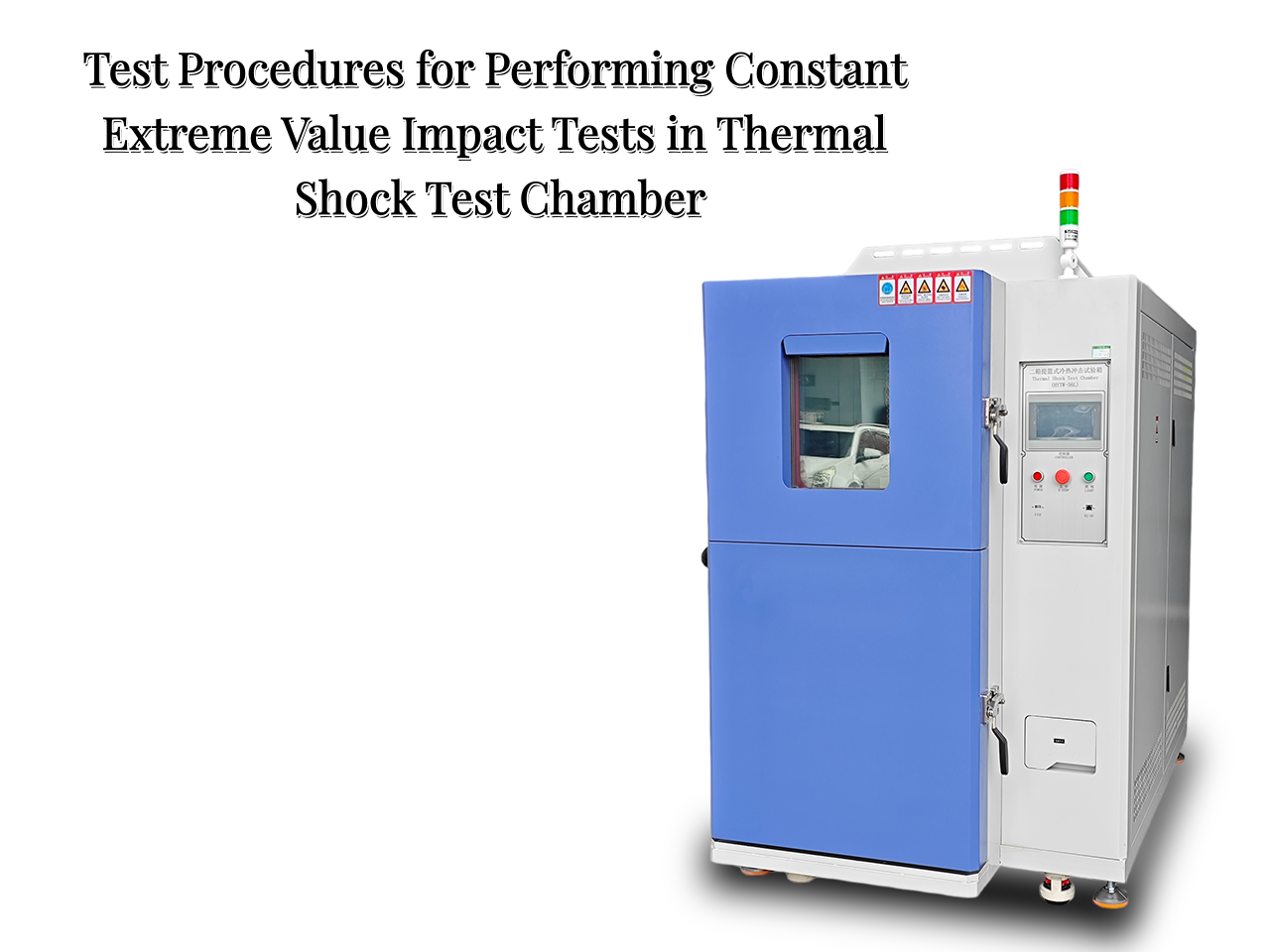
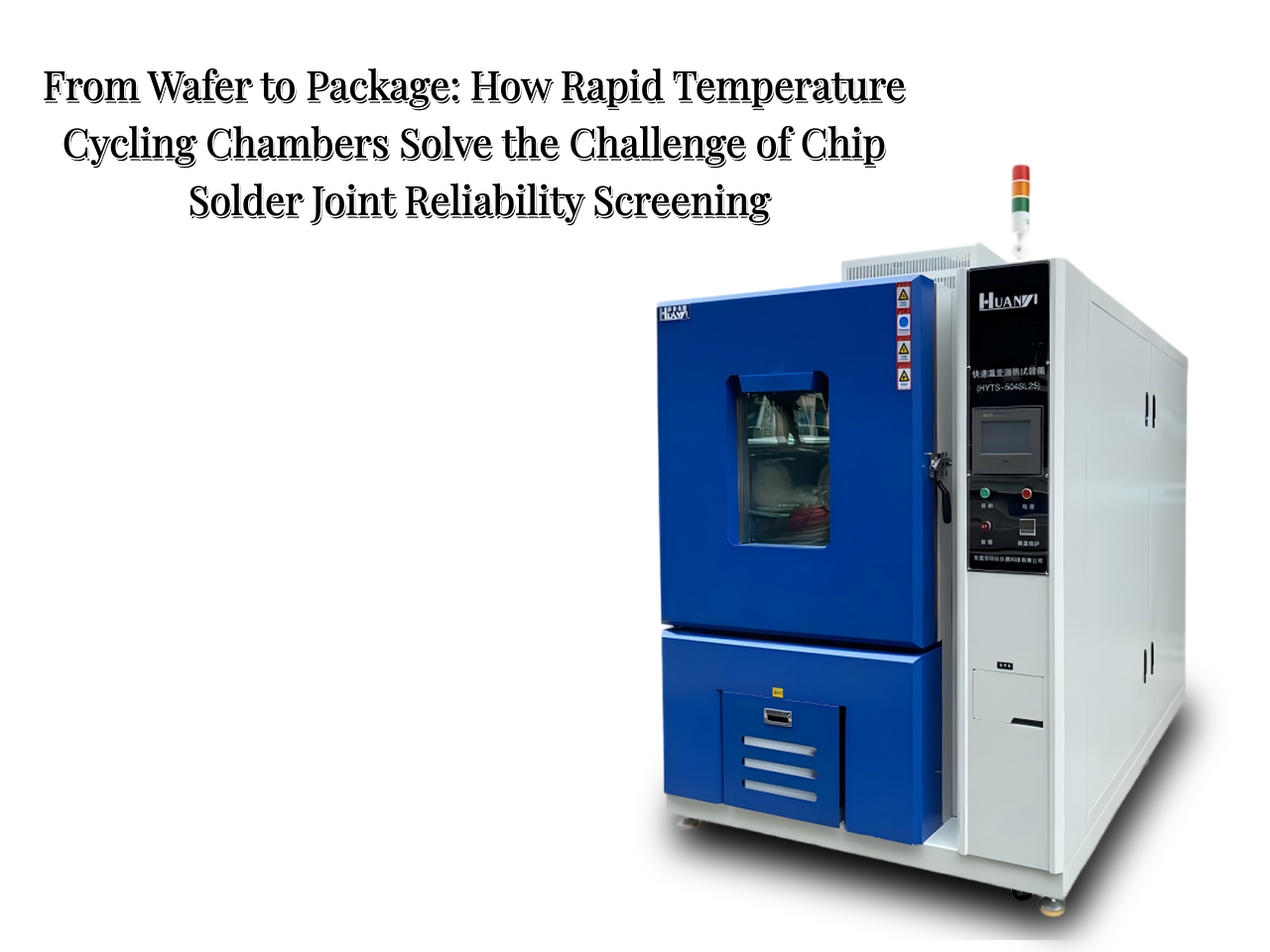
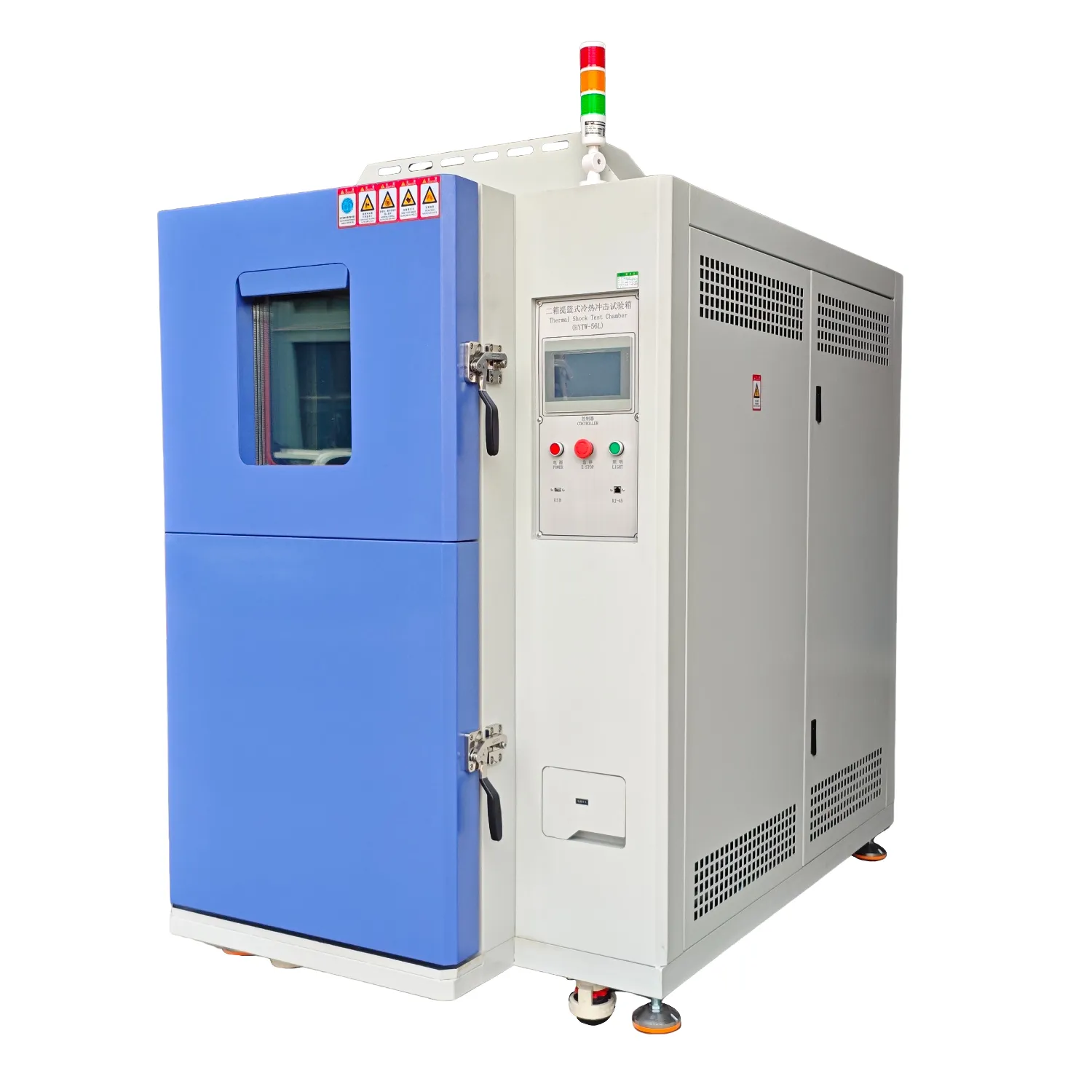
Test Procedures for Performing Constant Extreme Value Impact Tests in Thermal Shock Test Chamber
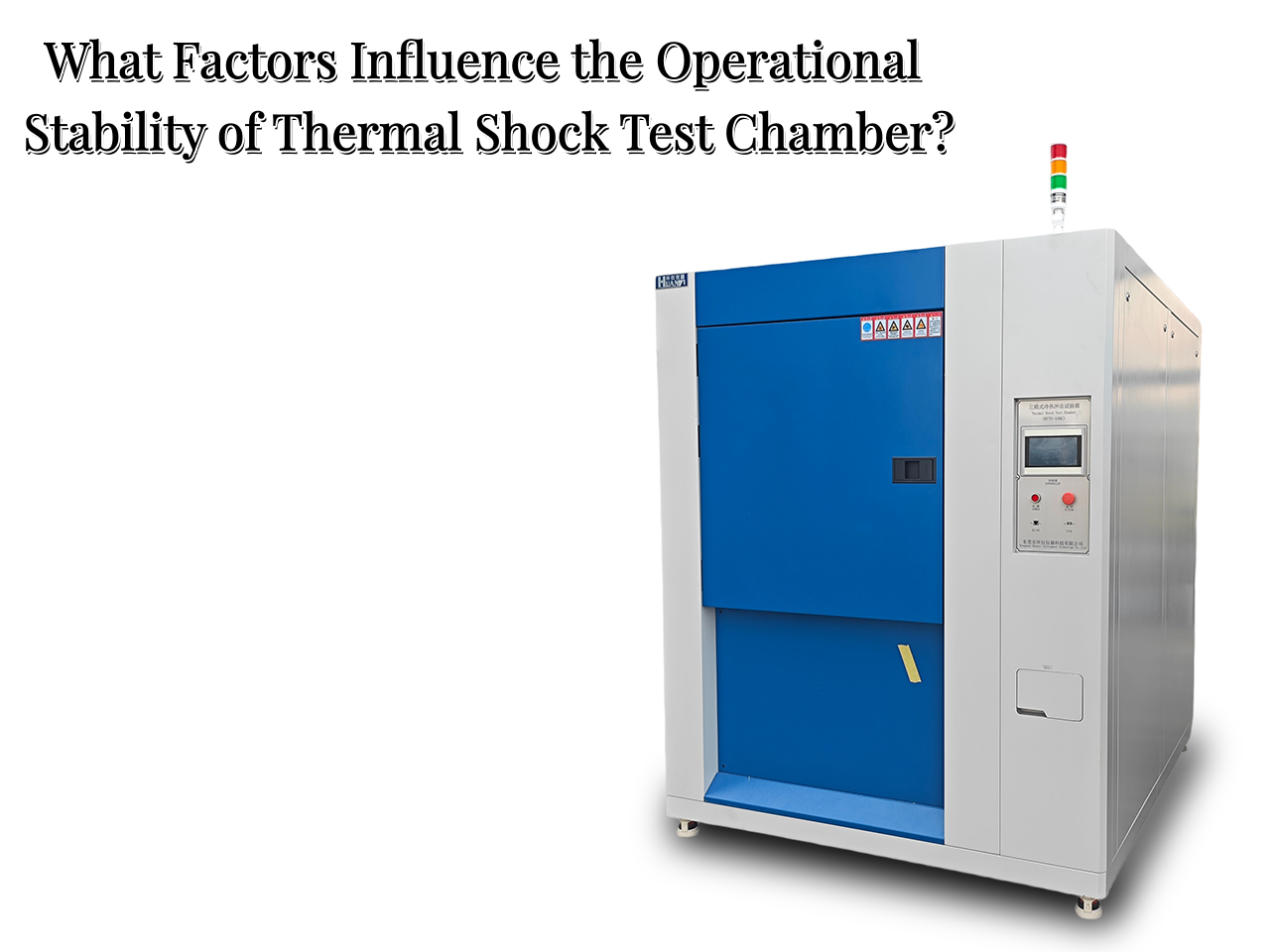
The constant extreme temperature shock test is applicable to temperature shock testing of military equipment. Temperature shock testing differs from general high and low temperature rise tests. Below are the steps for the constant extreme temperature shock test in a Thermal Shock Test Chamber.
The steps for the constant extreme temperature shock test are as follows:
1. Place the sample in the thermal shock test chamber and adjust the chamber air temperature to the low temperature extreme value specified in the technical document at a rate not exceeding 3℃/min (as shown in diagram a below). Maintain this temperature for the time specified in the technical document (diagrams a-b below).
2. Within 1 minute (diagrams b-c below), transfer the specimen to an atmospheric environment with a temperature of T2 to generate the temperature shock specified in the technical document, and maintain this temperature as specified in the technical document (diagrams c-e below).
3. If required by the technical documents, evaluate the effect of temperature shock on the sample within feasible limits.
4. If other cycles in the reverse direction are required, transfer the specimen to the T2 environment (e~f in the figure) within 1 minute and allow it to stabilize as required by the technical documents (f~b in the figure). Evaluate the effect of temperature shock if necessary, and then continue the test according to "2" and "3".
If another unidirectional temperature shock is required, return the sample to the T2 environment at a temperature change rate not exceeding 3℃/min and repeat steps "1"-"3"; if no other temperature shocks are required, proceed to step "5".
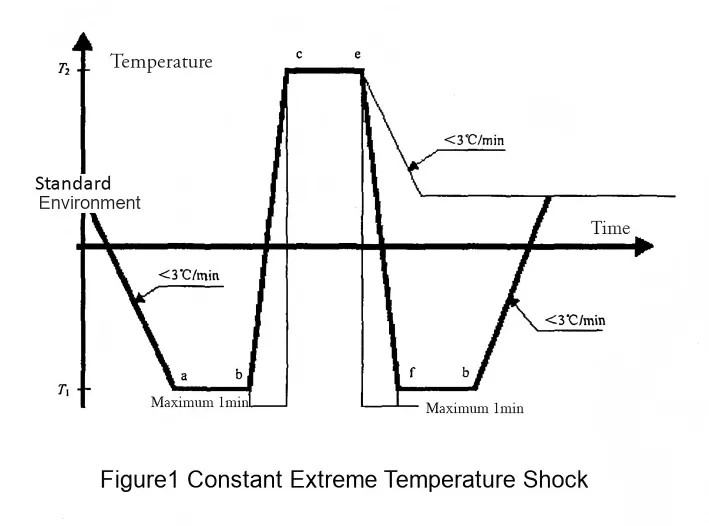
5. Return the sample to standard atmospheric conditions.
6. Inspect the sample; if necessary, put the sample into operation. Record the results and compare them with the data from before the test.
Temperature shock testing is required for many products, especially military equipment, where it is mandatory to ensure equipment quality.