Accelerating Industrial Validation: Rapid Rate Thermal Cycle Chambers for Italian Manufacturing
Italy represents one of the European Union’s most dynamic manufacturing powerhouses, celebrated for its high-precision engineering, luxury automotive development in Emilia-Romagna ("Motor Valley"), precision robotics in Piedmont and Lombardy, and innovative aerospace clusters across Campania, Apulia, and Lazio. In this sophisticated industrial landscape, product qualification and reliability standards have escalated exponentially. As electronic components become denser, mechanical tolerances tighter, and materials more composite, standard steady-state climatic testing no longer suffices. Modern Italian quality assurance departments require rapid rate thermal cycle chambers to unveil concealed thermal stress vulnerabilities, CTE (coefficient of thermal expansion) mismatches, and latent assembly solder micro-fractures before commercial deployment.
The Industrial Landscape in Italy: Transition to Electromobility and Aerospace Sophistication
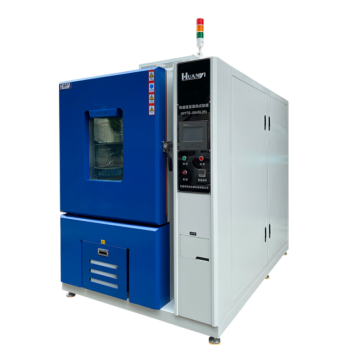
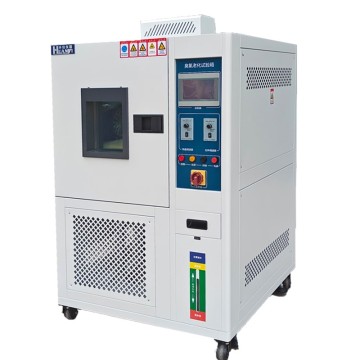
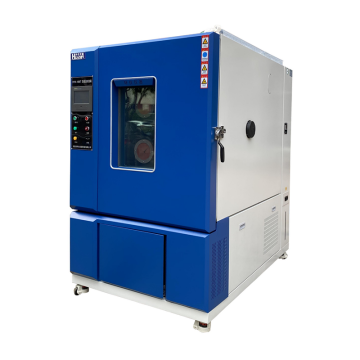
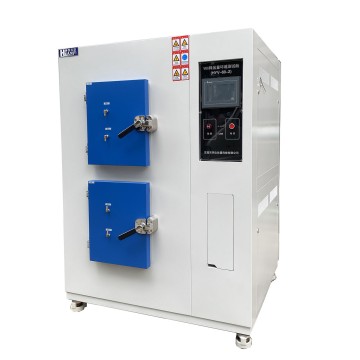
The Italian automotive sector, led by both iconic sports car manufacturers and tier-1 powertrain suppliers, is undergoing an aggressive transformation toward electric mobility (e-mobility), hybrid drivetrains, and connected ADAS (Advanced Driver Assistance Systems). The electronics integrated into contemporary Italian automotive systems operate within unforgiving environments: engine compartments exposed to instantaneous thermal spikes, inverter modules handling dense kilowatt loads, and regenerative braking assemblies subjected to alternating sub-zero alpine conditions and scorching Mediterranean summers. Rapid rate thermal cycle chambers—capable of shifting from -70°C to +180°C at rates of 10°C to 20°C per minute—are quintessential for evaluating IGBT power modules, battery management systems (BMS), sensors, and structural polymers against thermal fatigue.
Simultaneously, Italy’s aerospace and satellite infrastructure demands unyielding environmental screening. Systems certified under rigorous space agency guidelines (such as ESA-ECSS) and military avionics criteria (MIL-STD-810H) must survive rapid cyclic variations that mirror atmospheric egress and orbital temperature changes. Rapid thermal cycling actively stimulates micro-strains between multi-layer PCBs, ceramic chip carriers, and composite structures, assuring zero mission failure in orbit or critical flight phases.
Technological Dynamics and Future Trends in Fast-Cycling Climatic Testing
The global and Italian environmental simulation machinery market is driven by several transformative technological shifts:
- Energy Efficiency and Low-GWP Refrigerant Transition: In alignment with European F-Gas regulations (Regulation EU 517/2014 and subsequent revisions), Italian test facilities are transitioning away from high global warming potential refrigerants. Huanyi Instruments incorporates cutting-edge cascade refrigeration systems utilizing sustainable, compliant refrigerants along with electronically controlled expansion valves, minimizing total energy consumption during long screening runs.
- Industry 4.0 & Smart Digital Integration: Advanced Italian production facilities in Milan, Turin, and Bologna mandate full automated data integration. Modern rapid rate chambers come equipped with programmable PLC architectures, touchscreens, Ethernet interfaces, Modbus/TCP, and optional cloud telemetry for real-time thermal gradient monitoring, automated log auditing, and seamless connection to Manufacturing Execution Systems (MES).
- Defect Acceleration (ESS) vs. Conventional Thermal Shock: Unlike dual-zone elevator thermal shock chambers that impose abrupt, instantaneous thermal jolts, rapid rate thermal cycle chambers provide precisely calibrated, continuous air-circulated linear or non-linear temperature ramps. This accelerates defects through controlled thermomechanical strain without inducing unrealistic structural damage, making rapid-rate chambers the premier method for Environmental Stress Screening (ESS).
Localized Engineering Applications across Italy's Industrial Districts
Huanyi Instruments’ rapid rate thermal cycling systems are deployed across diverse vertical industries across Italy:
- Torino & Modena Automotive Supply Lines: Testing onboard ECUs, power inverters, high-voltage busbars, and LED lighting assemblies under cyclic thermal transitions to prevent field recall occurrences.
- Milan & Lombardy High-Tech Electronics: Verifying high-reliability industrial automation controllers, IoT gateways, and optical communication gear against solder joint delamination and resin degradation.
- Rome, Naples & Taranto Aerospace & Defense: Validating avionic guidance instruments, radar transmitters, and carbon-fiber composite fairings to withstand rapid high-altitude thermal gradients.
- Italian Packaging & Pharmaceutical Machinery: Ensuring that high-speed robotic servo drives and precision sensors maintain structural and operational integrity when deployed in rapid temperature-variable sterile cleanrooms.