- Home
- Products
- About Us
- Resources
- Support
- Contact Us
Leave Your Message
-
Phone
-
E-mail
-
Whatsapp
-
WeChat


Engineered to deliver rapid temperature ramp rates from 5°C/min up to 25°C/min, our flagship test chambers ensure stringent compliance with US industrial, aerospace, and energy standards.
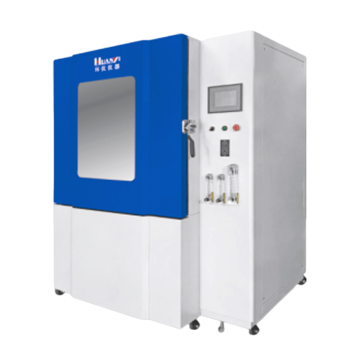
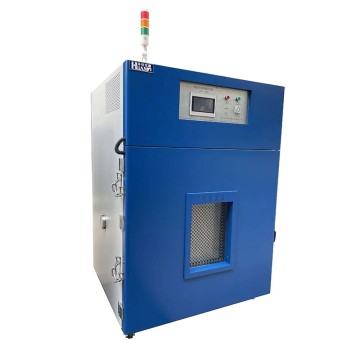
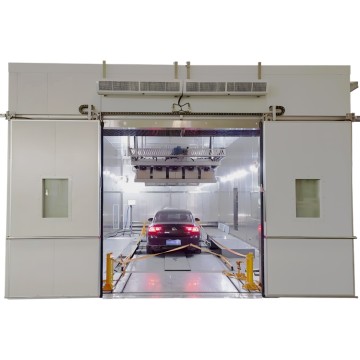
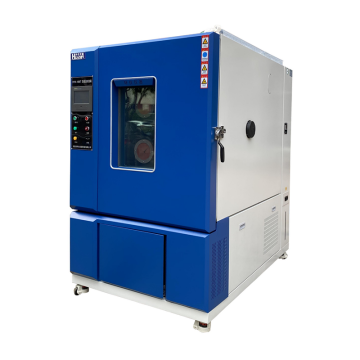
Across North America's advanced manufacturing corridor—stretching from the semiconductor corridors of Arizona and Texas to the aerospace centers in Southern California and the automotive hubs throughout the Midwest—the demand for Rapid Rate Thermal Cycle Chambers has reached an unprecedented scale. Modern engineering programs can no longer afford standard climatic cycles that ramp at sluggish rates of 1°C to 2°C per minute. To detect latent micro-flaws, mechanical solder joint fatigue, package delamination, and seal degradations prior to commercial volume rollouts, US test facilities demand accelerated rates of 5°C/min, 10°C/min, 15°C/min, and up to 25°C/min.
New mega-fabs across Arizona, Ohio, and Oregon implement high-ramp cyclic chambers to validate advanced 2.5D/3D IC packaging against severe thermo-mechanical stresses.
Meeting rigorous US Department of Transportation, SAE, and UL standards for lithium-ion battery modules subjected to extreme sub-zero conditions and fast charging heat dissipation.
Executing continuous compliance screening under MIL-STD-810H and RTCA DO-160G for airborne radar, avionics packages, and commercial satellite payloads.
A true rapid rate thermal cycling system is fundamentally distinguished from standard climatic cabinets through its cooling architecture, thermal mass displacement, and aerodynamic duct engineering. Achieving ramp rates up to 20°C/min or higher under live electrical loads requires heavy-duty binary cascade refrigeration units driven by semi-hermetic or open reciprocating compressors, often supplemented with liquid nitrogen (LN2) injection boost systems.
Furthermore, Huanyi integrates optimized cross-flow fan blowers and precision micro-channel evaporators that maintain laminar airflow rates between 1.5 m/s and 2.5 m/s across the entire work envelope. This aerodynamic design eliminates localized thermal stagnancy, guaranteeing that high-density device-under-test (DUT) clusters experience uniform heat transfer. Electronic expansion valves (EEVs) controlled by high-speed programmable algorithms dynamically balance refrigerant mass flow against reactive thermal shock waves, preventing compressor hunting while trimming overall power consumption by up to 22% during prolonged dwell plateaus.
American engineering groups operate under stringent regulatory mandates where test reproducibility is paramount. Huanyi rapid rate chambers are specifically engineered and verified to support the industry's most rigorous benchmarks:
From private space launch complexes in Cape Canaveral and Brownsville to automotive R&D facilities across Michigan, rapid thermal cycling serves as the frontline defense against field warranty exposure. In electric mobility, engineers expose traction inverters and power conversion modules (SiC and GaN semiconductors) to violent thermal transitions between -40°C and +125°C while monitoring real-time switching efficiency. In telecommunications and defense photonics, localized test facilities use rapid chambers to verify optical transceivers, phased-array radars, and ruggedized servers deployed in outdoor base stations and maritime installations.
Tailored simulation test environments engineered for mission-critical industrial manufacturing, safety compliance, and multi-sector quality assurance throughout North America.

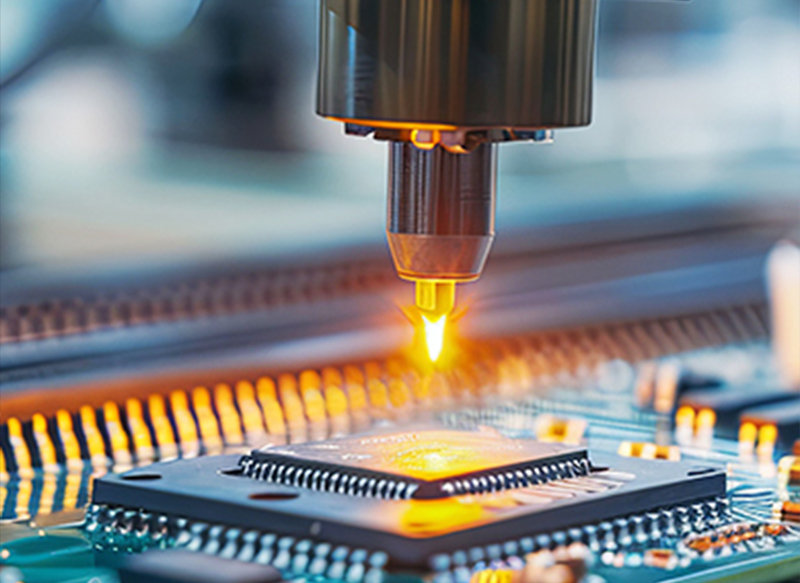





Dongguan Huanyi Instruments Technology Co., Ltd. was established on March 20, 2007, covering an area of 6,022 square meters. It is a high-tech enterprise integrating R&D, production, sales and after-sales service. It participated in the drafting of national standards and industry standards for environmental simulation test equipment.
As an original equipment manufacturer (OEM), Huanyi eliminates distributor markups, providing direct engineering consultation, bespoke dimensioning, non-standard automation integration, and full lifecycle technical assurance for US industrial laboratories.
Recognized globally and trusted by world-class leaders in electronics, manufacturing, and advanced research institutions.







Our systematic, ISO-certified manufacturing and quality assurance workflow guarantees that every test chamber matches exact testing parameters before shipment to the United States.
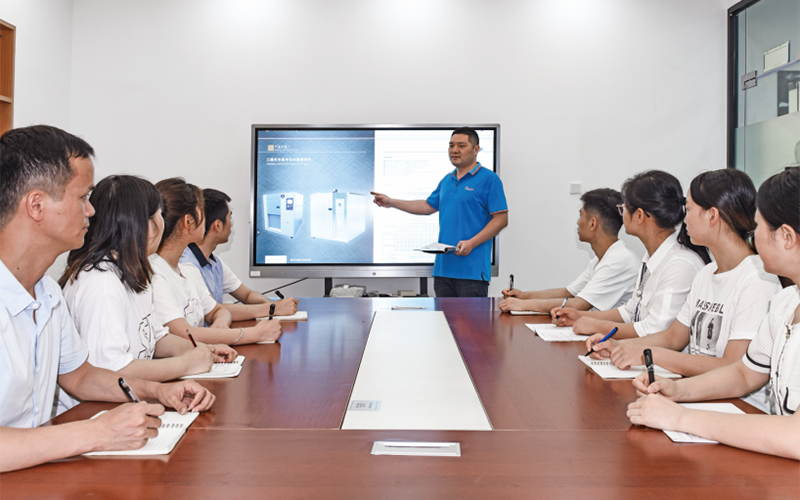
(1) Meeting to confirm customer needs
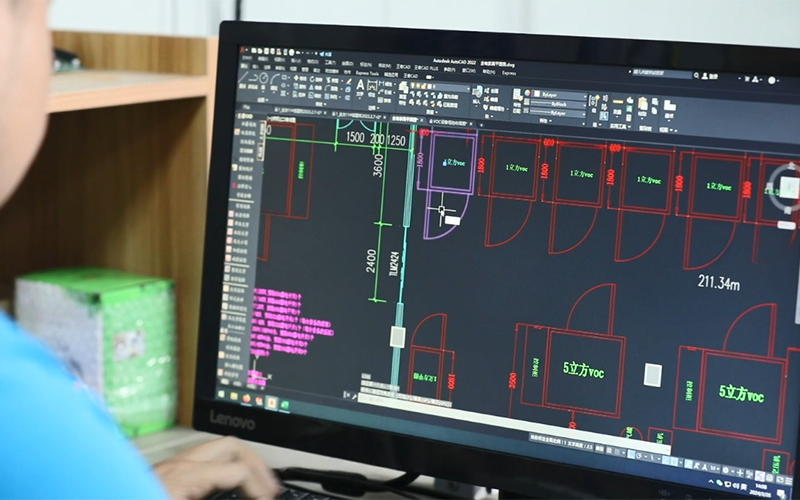
(1) The product development team develops and improves products according to customer needs.
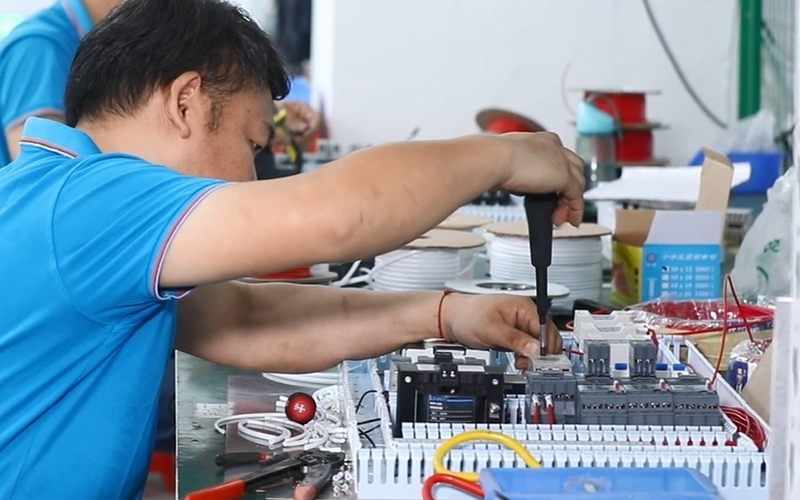
(1) Welding process
(2) Paint baking process
(3) Equipment assembly
(4) Equipment debugging
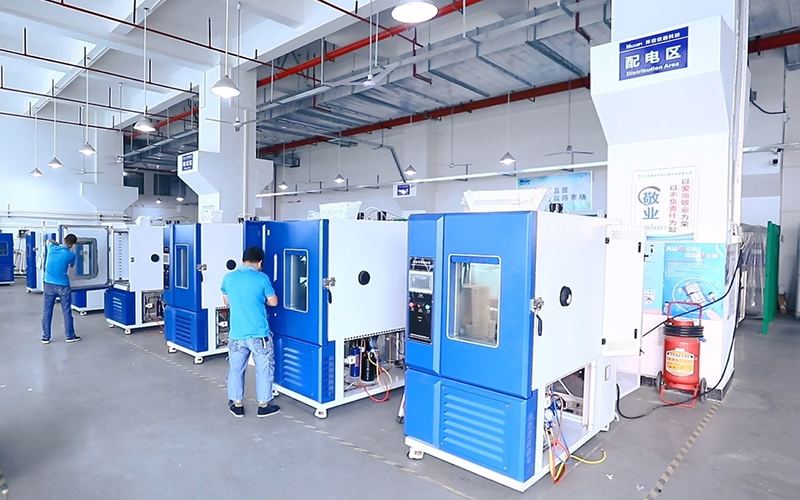
(1) Quality control
(2) Software debugging/Data calibration
(3) Visual/Internal inspection
(4) Equipment ready for dispatch
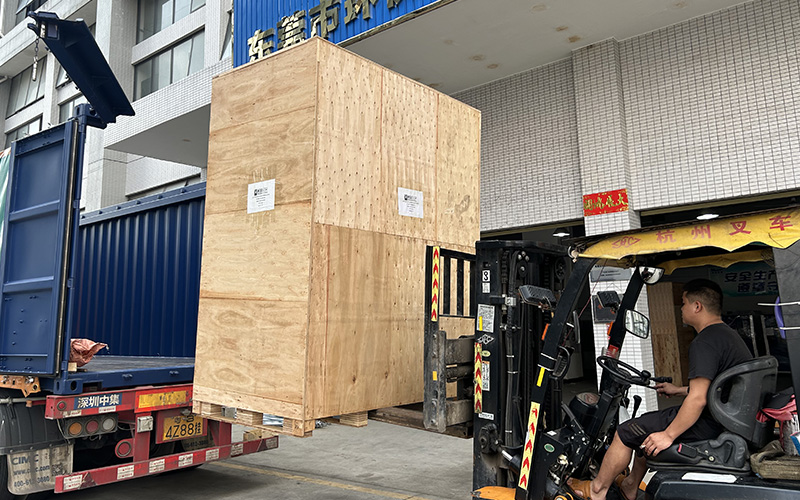
(1) Wood case package
(2) Package to container
(3) Container loading
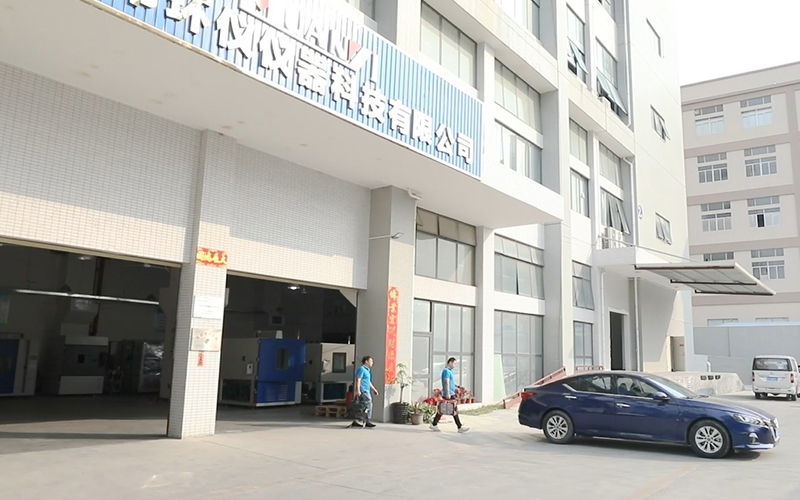
(1) Fault repair
(2) On-site inspection service
(3) Provide solutions
(4) Telephone follow-up
The test chamber sector across the United States is currently navigating a transformational shift fueled by environmental policy mandates, digitalization, and predictive automation:
1. EPA AIM Act Compliance & Next-Generation Refrigerants: Under the US Environmental Protection Agency's American Innovation and Manufacturing (AIM) Act, high-GWP hydrofluorocarbons (such as R-404A and R-507A) are being systematically phased down. Huanyi is actively deploying advanced eco-compliant thermal management architectures utilizing transitional blends such as R-449A, R-452A, and zero-ODP cascade designs. This guarantees American test labs remain fully future-proof against federal environmental restrictions without compromising cryogenic pulldown capacity.
2. Digital Twins and Predictive Thermal Load Tracking: Modern rapid cycling demands more than just aggressive heating and cooling; it requires dynamic compensation for active device heat generation (often exceeding 5 kW to 10 kW in high-power compute server racks). By implementing intelligent feed-forward algorithms, our instrumentation anticipates DUT heat surge and modulates cooling valve apertures milliseconds before temperature deviations take place, safeguarding thermal gradient consistency.
3. IoT Architecture & Cloud-Based Remote Diagnostics: Lab managers across multi-facility setups require unified telemetry. Our systems support RESTful APIs, Modbus TCP, and web-based dashboard integrations, enabling engineers in California, Michigan, or Texas to remotely audit test curves, retrieve NIST-traceable calibration logs, and schedule automated maintenance intervals from any secure browser.
Browse our complete catalog of specialized testing equipment—from high-rate thermal cycling and thermal abuse testing to rain, sand, and hazardous emissions analysis.